


The Local Legislative Process
Understanding the local legislative process is essential for effective community advocacy. At Rise & Rally, we understand the importance of comprehending how laws are made at the local level, as they directly impact our daily lives and the well-being of our neighborhoods. From identifying issues to implementing new laws, each step in the local legislative process shapes the policies that govern our communities. By understanding this process, we can be more equipped and prepared on our advocacy journey on a local level.
Before delving into local legislative advocacy, it’s essential to ensure it’s the appropriate avenue for your advocacy efforts. Federal, state, and local governments each have their own legislative processes, each with its unique set of procedures and priorities. To determine the most suitable path for your advocacy goals, take a moment to familiarize yourself with the distinctions between federal, state, and local advocacy. This understanding will enable you to make informed decisions and channel your advocacy efforts effectively.
Okay, if you are still here then you’ve determined you want to work on changing local legislation! Great! Choosing to engage in local legislative advocacy is a powerful way to bring about positive change right in your own community. While it might seem overwhelming at first, the impact of local legislation can be profound and directly impact the quality of life for those around you. By understanding the steps involved in the local legislative process and your role in it, you can effectively advocate for policies that reflect your values and contribute to the betterment of your neighborhood. Let’s dive into the local legislative process together and equip you with the tools to make a meaningful impact where it counts the most: right at home.
THE OVERVIEW
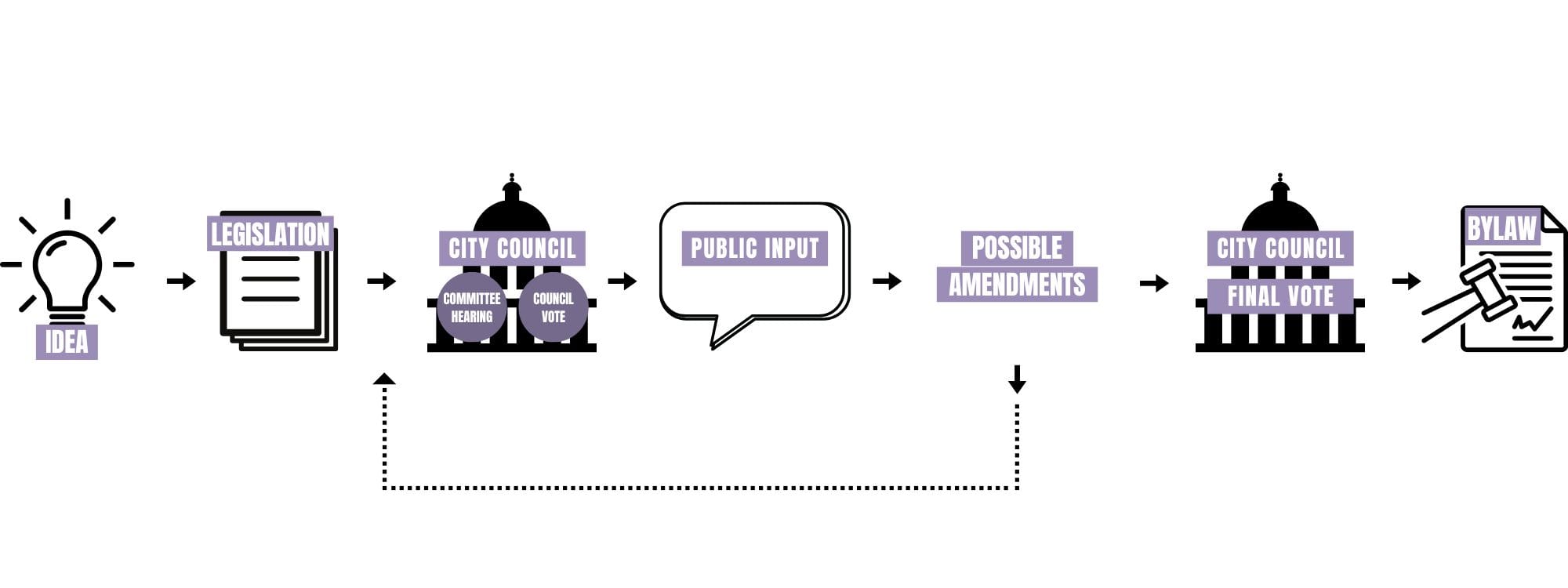
THE BREAKDOWN
You may be aware of how the legislative process works federally or in your state, but what about locally? Usually in this type of advocacy you are involved at the federal or state level, but it’s important to remember that you can make changes that truly matter right in your own local community too! To help you do that we developed this comprehensive step-by-step breakdown of the local legislative process. It goes through each step of the local legislative process (though names/processes may be different based on where you live), clarifying who typically plays a role, explaining key terms, and providing essential information to empower you to engage effectively. Whether you’re a seasoned advocate or new to the realm of policymaking, our resource aims to demystify the complexities of local lawmaking, enabling you to make a meaningful impact on the issues you’re passionate about.
01. Identify The Problem & Research Any Active Legislation
Before initiating any legislative action, it’s crucial to identify the specific issue or problem in your community that requires attention. Once the issue is identified, the next step involves conducting thorough research to understand the current legal landscape surrounding the problem. This research includes examining existing laws, ordinances, regulations, and policies at the local, state, and federal levels that may already address aspects of the issue. By comprehensively reviewing existing legislation, you can gain insights into gaps, overlaps, or areas needing improvement in the regulatory framework.
People Involved:
(You) an individual residing within a defined geographic area, represented by an elected official, whose interests and concerns the official is responsible for representing in the legislative process.
Individuals or groups within the community who are passionate about the issue and actively involved in researching relevant laws and regulations.
Terms To know:
The overarching structure of laws, regulations, and policies that govern a particular issue or area of activity within a jurisdiction.
The process of proposing, drafting, and advocating for new legislation or amendments to existing laws to address identified gaps or shortcomings.
The process of proposing, drafting, and advocating for new legislation or amendments to existing laws to address identified gaps or shortcomings.
02. Contact & Collaborate With Your Representative
The next step is to engage with your local representative to discuss the matter and explore potential legislative solutions. Your local representative could be a city council member, township trustee, or similar official responsible for representing your community’s interests in local governance. Contacting your local representative can be done through various means, such as scheduling a meeting, sending an email, or attending a town hall event. During the interaction, you can present your concerns, share research findings, and advocate for specific legislative actions to address the identified issue.
People Involved:
(You) an individual residing within a defined geographic area, represented by an elected official, whose interests and concerns the official is responsible for representing in the legislative process.
Elected official who represents your community’s interests in local government. This could be a city council member, township trustee, or similar official.
TERMS TO KNOW:
A public meeting held by elected officials to discuss issues of local concern and gather input from constituents.
03. Crafting The Legislation
This step typically requires collaboration between you, your representative, and potentially legal experts to articulate the language and objectives of the proposed law. Drafting legislation involves specifying the details of the proposed policy, outlining its purpose and scope, and considering potential implications for the community. The drafted legislation should be clear, concise, and aligned with the desired outcomes to address the identified issue effectively.
People Involved:
(You) an individual residing within a defined geographic area, represented by an elected official, whose interests and concerns the official is responsible for representing in the legislative process.
Elected official who represents your community’s interests in local government. This could be a city council member, township trustee, or similar official.
TERMS TO KNOW:
The process of writing or composing the language of a proposed law or legal document, including specifying its provisions and details.
Proposed laws or statutes introduced by a legislative body, such as a city council or township board, for consideration and potential enactment.
04. Your Representative Introduces The Legislation
Your local representative will take the lead in formally presenting the proposed legislation during a council meeting or board session. They will typically outline the purpose and objectives of the legislation, explain its potential impact on the community, and seek support from fellow council members or trustees. Introducing the legislation marks a critical step in the legislative process, as it initiates formal consideration and deliberation by the governing body.
People Involved:
Fellow elected officials who will receive and consider the introduced legislation during council or board meetings.
Elected official who represents your community’s interests in local government. This could be a city council member, township trustee, or similar official.
TERMS TO KNOW:
The formal presentation of proposed legislation to a legislative body for consideration and deliberation.
Scheduled gatherings of elected officials to conduct official business, including the consideration of proposed legislation and policy matters.
05. Committee referral
Committees play a crucial role in the legislative process by examining the details of proposed laws, gathering input from stakeholders, and making recommendations to the full council or board. During committee review, hearings may be held to allow for public input and expert testimony on the legislation’s potential impacts. Committee members carefully evaluate the proposed legislation to ensure it aligns with community needs and priorities before advancing it for further consideration.
People Involved:
Leads the committee proceedings, sets the agenda, and ensures orderly deliberations.
Elected officials appointed to serve on committees responsible for reviewing specific types of legislation.
(You) an individual residing within a defined geographic area, represented by an elected official, whose interests and concerns the official is responsible for representing in the legislative process.
Individuals or groups with a vested interest in the proposed legislation, such as community members, advocacy organizations, and industry representatives.
TERMS TO KNOW:
A subgroup of elected officials responsible for reviewing and analyzing proposed legislation within a specific area of jurisdiction.
A formal meeting of a committee to gather information, testimony, and input from stakeholders on proposed legislation.
Guidance or advice provided by the committee to the full council or board regarding the proposed legislation.
06. Council Or Board Vote
Council members or trustees deliberate on the merits of the legislation, consider feedback from committee members and stakeholders, and ultimately decide whether to approve or reject it. A majority vote is typically required for the legislation to pass and move forward in the legislative process. This step is critical as it represents the culmination of efforts to address the identified issue or problem through formal decision-making by the governing body.
People Involved:
Administrative officials responsible for implementing council decisions and overseeing local government operations.
Elected officials who represent the community and have the authority to vote on proposed legislation.
The presiding officer of the council or board, who may have the authority to cast a tie-breaking vote if needed.
TERMS TO KNOW:
The greater number or portion of votes needed for legislation to pass, typically more than half of the total votes cast.
The individual who leads the council or board meetings and ensures orderly proceedings, such as the mayor or board chair.
A vote cast by the presiding officer to break a tie if council members or trustees are evenly divided on an issue.
The formal expression of an opinion or decision by council members or trustees on proposed legislation.
07. Public Input
Residents have the opportunity to voice their opinions, concerns, and suggestions regarding the proposed legislation. Public input may be solicited through various means, such as public hearings, town hall meetings, online forums, or written submissions. These forums provide residents with a platform to express their views directly to elected officials and decision-makers, influencing the final outcome of the legislation.
People Involved:
Members of the community who participate in public hearings, town hall meetings, or other forums to provide input on the proposed legislation.
Elected officials who listen to and consider public input when making decisions on legislation.
The presiding officer of the council or board who may moderate public input sessions and ensure all voices are heard.
TERMS TO KNOW:
The process of involving residents in decision-making processes and fostering active participation in local governance.
An official meeting where members of the public are invited to provide testimony or comments on a specific issue, such as proposed legislation.
A public forum or gathering organized by elected officials to discuss issues of local concern and solicit feedback from residents.
A formal document or statement submitted by individuals or organizations to express their views or concerns on a particular issue.
08. Council or Board Vote
Once the proposed legislation has undergone committee review and public input, it is brought before the full city council or board of trustees for a vote. During this stage, council members or trustees consider the merits of the legislation based on committee recommendations, public feedback, and their own assessment of its potential impact on the community. A majority vote is typically required for the legislation to pass and advance to the next stage of the legislative process.
People Involved:
Responsible for recording and documenting the outcomes of council or board votes and maintaining official records.
Elected officials who listen to and consider public input when making decisions on legislation.
The presiding officer of the council or board who may moderate public input sessions and ensure all voices are heard.
TERMS TO KNOW:
A voting system where more than half of the total number of votes cast is required for a decision or action to be approved.
09. Implementation and Enforcement
Upon approval of the legislation by the city council or board of trustees, the next step is its implementation by local government agencies or departments. Implementation involves putting the new law into practice and ensuring that it is enforced effectively to achieve its intended goals. This may include developing regulations, guidelines, and procedures to support the implementation process, as well as allocating resources and personnel as necessary.
People Involved:
Government officials responsible for overseeing the implementation of the new legislation and ensuring compliance with its provisions. This may include city managers, department heads, and other administrative staff.
Officers tasked with enforcing the new law and ensuring that residents and businesses comply with its requirements.
TERMS TO KNOW:
Rules and directives established by government agencies to interpret and enforce the provisions of legislation. Regulations provide detailed guidance on how the law should be applied in specific situations.
The act of ensuring compliance with laws through monitoring, investigation, and application of penalties for violations.
The process of putting a law into effect by carrying out its provisions and requirements.
Rules and directives established by government agencies to interpret and enforce the provisions of legislation. Regulations provide detailed guidance on how the law should be applied in specific situations.