

Engaging with news media is a powerful way to raise awareness and advocate for chronic, complex, and rare conditions, as well as healthcare reform. Newspapers, magazines, and TV segments reach diverse audiences and can significantly amplify your message.
The information and resources on this page are designed to help you navigate the world of news media, offering practical strategies and resources to effectively share your story and advocate for change.
Leveraging the reach and credibility of traditional news outlets, you can influence public opinion, educate the community, and drive meaningful action. From crafting compelling press releases to preparing for interviews, ensuring your advocacy efforts are impactful and far-reaching.
Whether you’re new to media engagement or looking to refine your approach, this resource is here to support your journey in making a difference.
NEWSPAPERS
Audience You Are Reaching:
• Baby Boomers, Generation X
• General readers interested in current events, health issues, and public policy.
Best Way to Engage in Advocacy: Newspapers are ideal for reaching a broad audience with detailed articles. Share personal stories, expert opinions, and statistical data to highlight the importance of healthcare reform for chronic, complex, and rare conditions. Craft narratives that are educational and inspiring to encourage readers to recognize and act on these issues.
TV NEWS
Audience You Are Reaching:
• Baby Boomers, Generation X
• A broad, diverse audience looking for visual and impactful stories.
Best Way to Engage in Advocacy: Engage in interviews or news segments to share personal stories and expert insights on healthcare issues. Utilize visuals like infographics or video footage to emphasize the challenges faced by those with chronic, complex, and rare conditions. Aim to be featured during health awareness months or special reports for maximum impact.
MAGAZINES
Audience You Are Reaching:
• Generation X, Millennials
• Subscribers interested in specialized topics such as health, wellness, and social justice.
Best Way to Engage in Advocacy: Magazines offer the opportunity for in-depth coverage through feature articles or interviews. Pitch stories that delve into personal experiences and the intricacies of healthcare reform. Use comprehensive research and engaging narratives to educate readers and advocate for necessary changes.
RADIO SHOWS
Audience You Are Reaching:
• Baby Boomers, Generation X
• Listeners who enjoy in-depth discussions and real-time news within local communities.
Best Way to Engage in Advocacy: Participate in live interviews and call-in segments to discuss healthcare reform. Share compelling stories and provide actionable steps, such as signing petitions or attending local events. Use the platform to mobilize listeners for community action and awareness campaigns.
NEWSPAPERS
Audience You Are Reaching:
• Baby Boomers, Generation X
• General readers interested in current events, health issues, and public policy.
Best Way to Engage in Advocacy: Newspapers are ideal for reaching a broad audience with detailed articles. Share personal stories, expert opinions, and statistical data to highlight the importance of healthcare reform for chronic, complex, and rare conditions. Craft narratives that are educational and inspiring to encourage readers to recognize and act on these issues.
MAGAZINES
Audience You Are Reaching:
• Generation X, Millennials
• Subscribers interested in specialized topics such as health, wellness, and social justice.
Best Way to Engage in Advocacy: Magazines offer the opportunity for in-depth coverage through feature articles or interviews. Pitch stories that delve into personal experiences and the intricacies of healthcare reform. Use comprehensive research and engaging narratives to educate readers and advocate for necessary changes.
TV NEWS
Audience You Are Reaching:
• Baby Boomers, Generation X
• A broad, diverse audience looking for visual and impactful stories.
Best Way to Engage in Advocacy: Engage in interviews or news segments to share personal stories and expert insights on healthcare issues. Utilize visuals like infographics or video footage to emphasize the challenges faced by those with chronic, complex, and rare conditions. Aim to be featured during health awareness months or special reports for maximum impact.
NEWS SITE
Audience You Are Reaching:
• Millennials, Generation Z
• Digital readers who seek quick, up-to-date information and multimedia content.
Best Way to Engage in Advocacy: Write guest articles or opinion pieces, incorporating hyperlinks to resources and research. Leverage multimedia elements such as videos and interactive graphics to enhance engagement. Promote online petitions or virtual events to drive action and encourage digital advocacy.
RADIO SHOWS
Audience You Are Reaching:
• Baby Boomers, Generation X
• Listeners who enjoy in-depth discussions and real-time news within local communities.
Best Way to Engage in Advocacy: Participate in live interviews and call-in segments to discuss healthcare reform. Share compelling stories and provide actionable steps, such as signing petitions or attending local events. Use the platform to mobilize listeners for community action and awareness campaigns.
PODCASTS
Audience You Are Reaching:
• Millennials, Generation Z
• Engaged listeners who prefer discussions and storytelling, often niche audiences.
Best Way to Engage in Advocacy: Guest on health or social justice-focused podcasts to share personal experiences and expert opinions. Discuss complex topics in-depth and promote Rise & Rally events, resources, and initiatives. Provide listeners with practical ways to get involved in advocacy efforts.
NEWS SITE
Audience You Are Reaching:
• Millennials, Generation Z
• Digital readers who seek quick, up-to-date information and multimedia content.
Best Way to Engage in Advocacy: Write guest articles or opinion pieces, incorporating hyperlinks to resources and research. Leverage multimedia elements such as videos and interactive graphics to enhance engagement. Promote online petitions or virtual events to drive action and encourage digital advocacy.
PODCASTS
Audience You Are Reaching:
• Millennials, Generation Z
• Engaged listeners who prefer discussions and storytelling, often niche audiences.
Best Way to Engage in Advocacy: Guest on health or social justice-focused podcasts to share personal experiences and expert opinions. Discuss complex topics in-depth and promote Rise & Rally events, resources, and initiatives. Provide listeners with practical ways to get involved in advocacy efforts.
BLOGS
Audience You Are Reaching:
• Millennials, Generation X
• Readers looking for personal stories, detailed articles, and niche content.
Best Way to Engage in Advocacy: Collaborate with bloggers to write guest posts or series about chronic, complex, and rare conditions. Share personal stories, research findings, and advocacy tips. Create a supportive community and encourage readers to participate in advocacy efforts through storytelling and informational content.
PRESS RELEASES
Audience You Are Reaching:
• Baby Boomers, Generation X
• Journalists, news outlets, and public relations professionals.
Best Way to Engage in Advocacy: Distribute press releases to announce new initiatives, research findings, or events related to healthcare reform. Highlight key messages and statistics to ensure coverage. Follow up with journalists to provide additional information and arrange interviews, ensuring detailed and accurate reporting.
LIVE VIDEOS
Audience You Are Reaching:
• Millennials, Generation Z
• Active social media users interested in real-time interaction and engagement.
Best Way to Engage in Advocacy: Host live Q&A sessions on platforms like Instagram, Facebook, or TikTok to discuss healthcare reform for chronic, complex, and rare conditions. Share personal stories, research, and advocacy tips in a conversational format. Humanize issues and inspire viewers to take action through storytelling and informational content.
BLOGS
Audience You Are Reaching:
• Millennials, Generation X
• Readers looking for personal stories, detailed articles, and niche content.
Best Way to Engage in Advocacy: Collaborate with bloggers to write guest posts or series about chronic, complex, and rare conditions. Share personal stories, research findings, and advocacy tips. Create a supportive community and encourage readers to participate in advocacy efforts through storytelling and informational content.
LIVE VIDEOS
Audience You Are Reaching:
• Millennials, Generation Z
• Active social media users interested in real-time interaction and engagement.
Best Way to Engage in Advocacy: Host live Q&A sessions on platforms like Instagram, Facebook, or TikTok to discuss healthcare reform for chronic, complex, and rare conditions. Share personal stories, research, and advocacy tips in a conversational format. Humanize issues and inspire viewers to take action through storytelling and informational content.
PRESS RELEASES
Audience You Are Reaching:
• Baby Boomers, Generation X
• Journalists, news outlets, and public relations professionals.
Best Way to Engage in Advocacy: Distribute press releases to announce new initiatives, research findings, or events related to healthcare reform. Highlight key messages and statistics to ensure coverage. Follow up with journalists to provide additional information and arrange interviews, ensuring detailed and accurate reporting.
DETERMINE YOUR REASON FOR & GOAL OF
SHARING WITH MEDIA OUTLETS
Before you begin your media outreach, it’s crucial to identify your primary reason for sharing your message and the goal you aim to achieve. Different purposes will shape how you present your information and what you hope to accomplish.
Whether you want to educate the public, raise awareness, inspire, call to action, combat stigma, influence policy or all of the above, having clear objective(s) will make your advocacy efforts more effective and help to inform what platform is best for what you are trying to achieve. Here are some common reasons for engaging with media outlets, tailored to the unique challenges of chronic, complex, and rare conditions, and the goals you might aim for.
RAISE AWARENESS
Goal: Increase public visibility and understanding of chronic, complex, and rare conditions and the barriers they face within the healthcare system.
Purpose: Utilize media coverage to highlight these types of conditions individually and as a whole, the challenges faced by these patient populations and the urgent need for policy changes to fix the system.
POLICY CHANGE
Goal: Advocate for specific legislative or policy changes to push forward healthcare reform and improve healthcare for those with chronic, complex, and rare conditions.
Purpose: Inform of, educate on, present compelling arguments to and provide evidence of the need and potential effectiveness to influence policymakers and the public in favor of proposed reforms.
EDUCATE
Goal: Share accurate and up-to-date information about chronic, complex, and rare conditions, individually and as a whole, and advocate for healthcare reform.
Purpose: Provide facts, statistics, and expert opinions to help the public and policymakers become aware of these types chronic, complex and rare conditions as well as the systemic barriers these communities face.
CALL TO ACTION
Goal: Encourage the audience to take specific actions, such as signing petitions or contacting their representatives so that they can help join us in our mission.
Purpose: Provide clear instructions and resources for how individuals can get involved in advocacy efforts, raise awareness about these conditions and the barriers these communities face and make their voices heard.
INSPIRE
Goal: Motivate individuals and communities to take action, advocate, raise awareness and support those affected by chronic, complex, and rare conditions.
Purpose: Share stories, testimonials, experiences, what is and can be done to help and examples of that positive change that is happening to encourage others to get involved in advocacy efforts.
COMBAT STIGMA
Goal: Reduce stigma and misconceptions about chronic, complex, and rare conditions and what healthcare reform actually means, looks like and involves.
Purpose: Share personal stories, expert insights, and educational content to challenge stereotypes and promote empathy and understanding so that others can better connect and understand these communities.
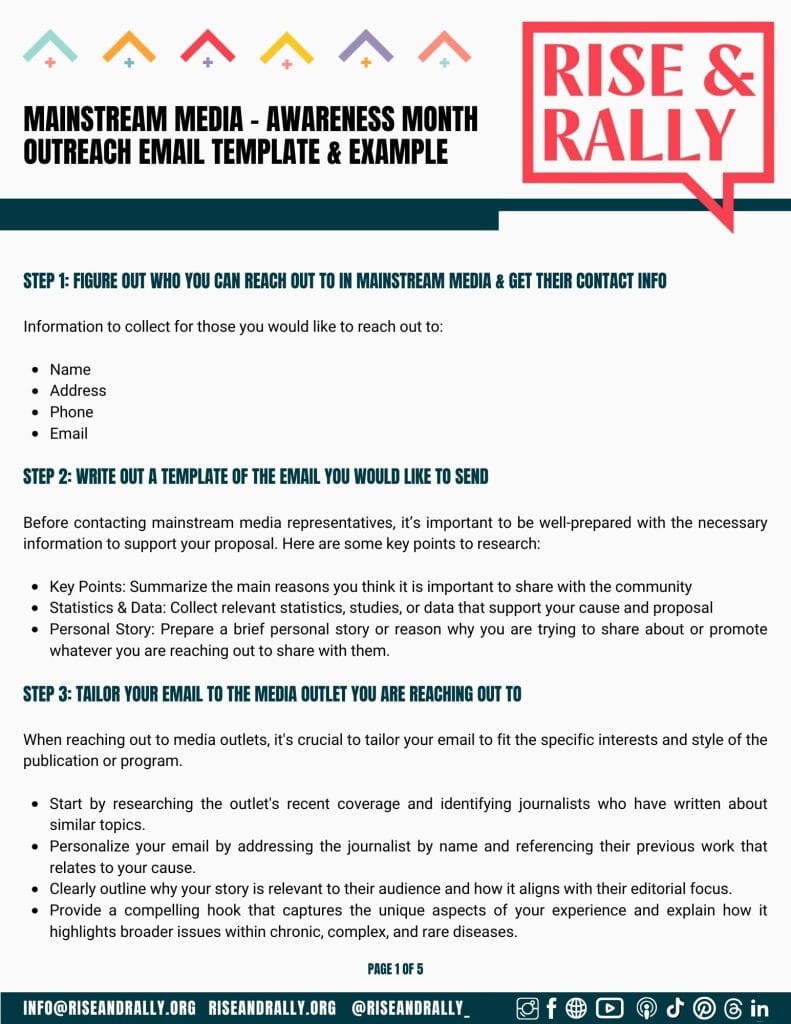
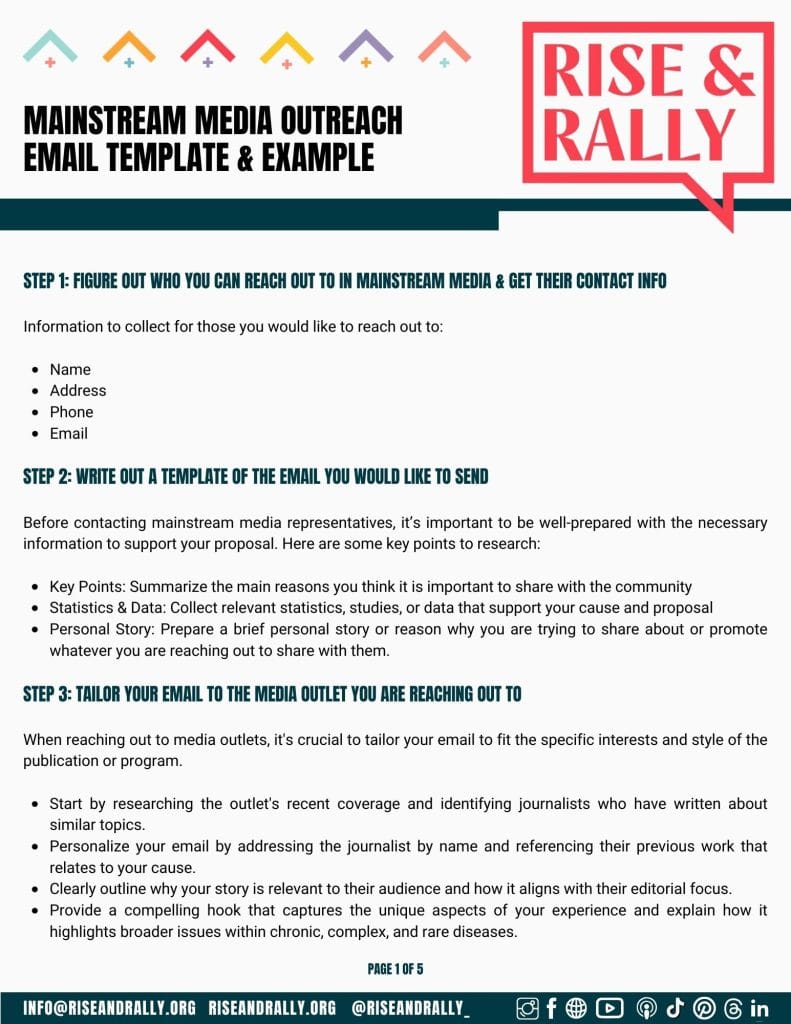
where do i start?
Reaching out to media outlets for advocacy can seem overwhelming and intimidating, but it doesn’t have to be!
There are steps you can take to ease into the process and start with the types of media that feel most comfortable for you. Maybe you’re comfortable going on podcasts but feel overwhelmed by TV news appearances. Perhaps a newspaper interview feels more approachable than a social media live session.
The best place to start is where you feel most at ease, and as you gain confidence, you may want to expand your outreach. Below, you’ll find some easy ways to get started.
Research Media Outlets
Start by identifying media outlets that align with your advocacy goals. Look for newspapers, magazines, TV shows, radio stations, and online platforms that cover health issues and healthcare reform. By targeting outlets with relevant audiences, you can ensure your message reaches those most likely to support your cause.Make a Contact List
Compile a list of contacts at each media outlet. Include journalists, editors, producers, and show hosts who cover topics related to chronic, complex, and rare conditions. Having a well-organized contact list will make it easier to send your pitches and follow up with the right people.Prepare Your Message
Develop a clear and compelling message about your cause. Include key points, statistics, and personal stories that highlight the importance of your advocacy. A well-crafted message will make it easier to communicate your goals and the impact of your work to media professionals.Gather Supporting Materials
Collect photos, videos, and other visual assets that can help illustrate your story. High-quality visuals can make your pitch more appealing to media outlets. Visuals add a personal touch and can help convey the emotional aspect of your advocacy.Write a Press Release
Craft a press release that outlines your story and its significance. Include all essential information and contact details for follow-up. A press release should be concise and to the point, providing journalists with all the necessary details to cover your story. You can get our press release template in the downloadable resources section below.Draft a Pitch Email
Create a concise and persuasive pitch email to send to your media contacts. Personalize each email to show that you’ve researched the outlet and understand their audience. Tailoring your pitch demonstrates your commitment and increases the likelihood of a positive response.Leverage Social Media
Use your social media platforms to share your story and tag relevant media outlets. This can increase your visibility and attract media attention. Engaging with media outlets on social media can also help build relationships and open doors for future collaborations.
Practice Your Interview Skills
Prepare for potential interviews by practicing your speaking points. Consider recording yourself or rehearsing with a friend to build confidence. Being well-prepared can help you articulate your message clearly and effectively during media appearances.Network with Media Professionals
Attend local events, webinars, or conferences where you can meet journalists and media professionals. Building a rapport in person or through professional networks can make your future outreach efforts more successful. Networking can also provide valuable insights into what types of stories media outlets are currently interested in.