



Rare Disease Advisory Councils (RDACs) serve a critical role in supporting the rare disease community by bridging the gap between patients, healthcare providers, researchers, and state government officials. These councils are established through state legislation and comprise a diverse group of individuals with deep knowledge and experience in rare diseases.
By providing expert policy advisement, RDACs aim to identify and address the unique barriers that prevent individuals with rare diseases from accessing proper treatment and care. Their work ensures that state policies are better aligned with the needs of the rare disease community, ultimately leading to more effective and equitable healthcare solutions.
The formation and expansion of RDACs across the United States reflect a growing recognition of the importance of rare disease advocacy at the state level. These state-specific councils play a crucial role in tailoring recommendations and policies to local needs, fostering collaboration among stakeholders, and driving meaningful changes in healthcare access and quality for rare disease patients. RDACs not only provide a platform for addressing the challenges faced by the rare disease community but also empower individuals to get involved in advocacy efforts, whether by joining an existing council or advocating for the creation of a new one in their state.
Rare Disease Advisory Councils (RDACs) serve a critical role in supporting the rare disease community by bridging the gap between patients, healthcare providers, researchers, and state government officials. These councils are established through state legislation and comprise a diverse group of individuals with deep knowledge and experience in rare diseases.
By providing expert policy advisement, RDACs aim to identify and address the unique barriers that prevent individuals with rare diseases from accessing proper treatment and care. Their work ensures that state policies are better aligned with the needs of the rare disease community, ultimately leading to more effective and equitable healthcare solutions.
The formation and expansion of RDACs across the United States reflect a growing recognition of the importance of rare disease advocacy at the state level. These state-specific councils play a crucial role in tailoring recommendations and policies to local needs, fostering collaboration among stakeholders, and driving meaningful changes in healthcare access and quality for rare disease patients. RDACs not only provide a platform for addressing the challenges faced by the rare disease community but also empower individuals to get involved in advocacy efforts, whether by joining an existing council or advocating for the creation of a new one in their state.
WHAT EXACTLY IS A RARE DISEASE ADVISORY COUNCIL?
A Rare Disease Advisory Council (RDAC) is a state-established body designed to support the rare disease community by providing expert policy advisement to state government officials.
These councils are made up of individuals who have a deep understanding of rare diseases, including patients, caregivers, healthcare providers, researchers, and advocates. The primary purpose of an RDAC is to identify and address barriers that prevent individuals with rare diseases from accessing proper treatment and care.
By offering informed recommendations, RDACs help ensure that state policies are better aligned with the needs of the rare disease community, leading to more effective and equitable healthcare solutions.
HISTORY & FORMATION
The concept of RDACs originated in North Carolina in 2015, when the first council was established by a coalition of patients, caregivers, families, and healthcare providers. This pioneering effort was driven by the recognition that rare disease patients face unique challenges that are often overlooked in broader healthcare discussions. The success of the North Carolina RDAC inspired other states to follow suit, and with the support of organizations like the National Organization for Rare Disorders (NORD), the movement quickly gained traction.
As of now, 26 states have established RDACs, each tailored to address the specific needs and circumstances of their rare disease communities. These councils are created through state legislation, reflecting a growing recognition of the importance of rare disease advocacy at the state level.
CURRENT RDAC STATE STATUS
Since the establishment of the first RDAC in North Carolina, the initiative has expanded significantly, with 26 states currently having their own councils. This widespread adoption underscores the critical role that RDACs play in advocating for the rare disease community.
Each state’s RDAC operates under specific legislative frameworks and guidelines, ensuring that the council’s activities are aligned with local needs and priorities. The formation of these councils is often driven by grassroots advocacy and the dedicated efforts of patient organizations, healthcare providers, and other stakeholders.
In 2023 alone, three additional states signed RDAC legislation into law, demonstrating the continued momentum and importance of these advisory bodies in improving health outcomes for rare disease patients across the country.
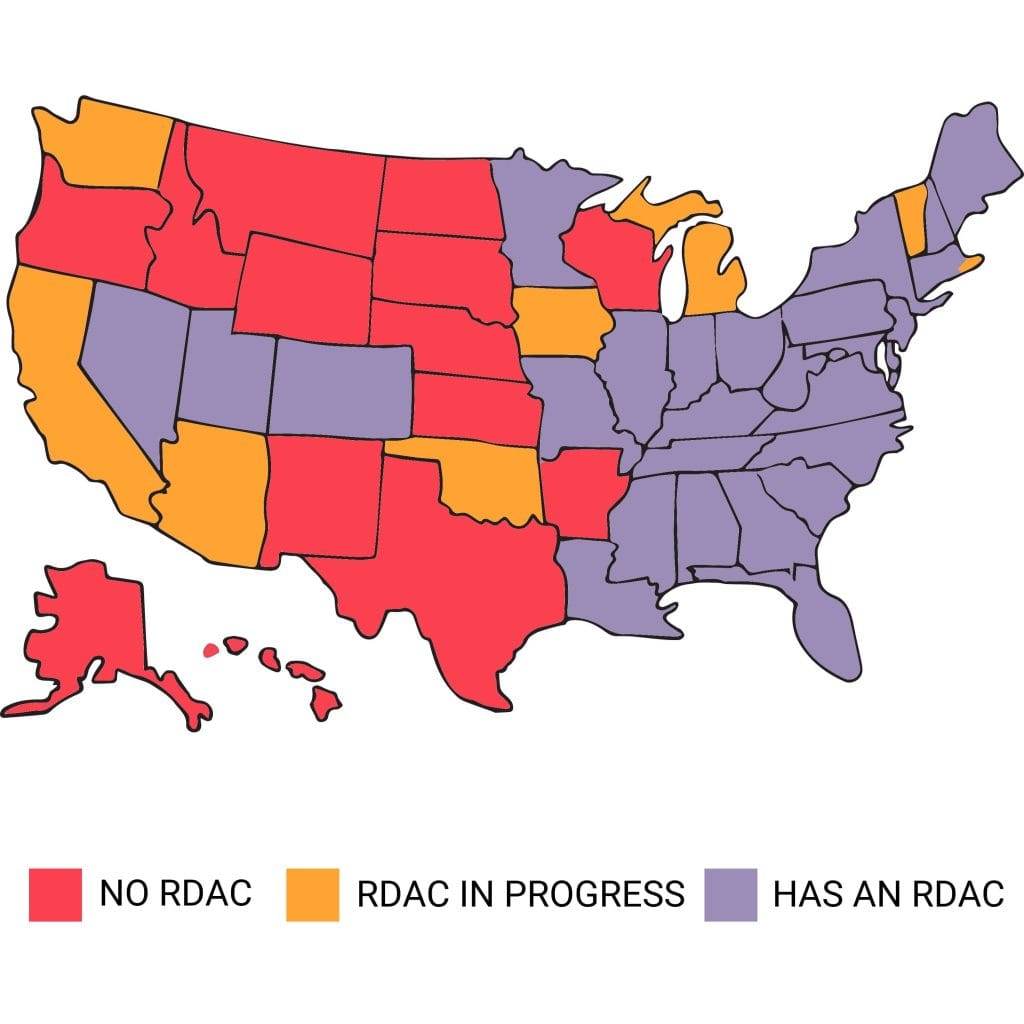
CURRENT RDAC STATE STATUS
Since the establishment of the first RDAC in North Carolina, the initiative has expanded significantly, with 26 states currently having their own councils. This widespread adoption underscores the critical role that RDACs play in advocating for the rare disease community.
Each state’s RDAC operates under specific legislative frameworks and guidelines, ensuring that the council’s activities are aligned with local needs and priorities. The formation of these councils is often driven by grassroots advocacy and the dedicated efforts of patient organizations, healthcare providers, and other stakeholders.
In 2023 alone, three additional states signed RDAC legislation into law, demonstrating the continued momentum and importance of these advisory bodies in improving health outcomes for rare disease patients across the country.
CHALLENGES FACED BY THE RARE COMMUNITY
Individuals with rare diseases encounter numerous challenges that complicate their journey to diagnosis, treatment, and ongoing care. One of the most significant obstacles is the delay in diagnosis, which can span several years due to the rarity and complexity of these conditions. Misdiagnosis is also common, leading to inappropriate treatments and prolonged suffering. Even when a correct diagnosis is achieved, patients often face a lack of treatment options as research and drug development for rare diseases are limited.
Additionally, the financial burden can be overwhelming, with high out-of-pocket costs for specialized care and treatments. Access to medical specialists who understand rare diseases is limited, further complicating patient care. These challenges collectively highlight the need for targeted support and advocacy, which RDACs are uniquely positioned to provide.
The Role of RDACs in Addressing These Challenges
RDACs play a crucial role in mitigating the challenges faced by the rare disease community. By bringing together experts from various fields, including healthcare, research, and patient advocacy, RDACs offer a comprehensive understanding of the barriers to care. They provide informed policy recommendations that address the specific needs of rare disease patients, ensuring that state legislation and regulations are designed to improve access to diagnosis, treatment, and ongoing care.
RDACs work to identify gaps in the healthcare system and propose actionable solutions, such as improving insurance coverage for rare disease treatments, funding for rare disease research, and initiatives to increase the availability of medical specialists. Their insights help shape policies that enhance the quality of life for rare disease patients and their families.
The Importance of State-Specific Councils
Each state has unique healthcare landscapes, legislative environments, and patient populations, making state-specific RDACs essential. Tailoring RDACs to the specific needs of a state ensures that the recommendations and policies proposed are relevant and effective.
State-specific councils can address local barriers, such as regional shortages of specialists or state insurance policies that impact rare disease patients. They can also foster collaboration among local stakeholders, including healthcare providers, patient organizations, and policymakers, to create a more supportive and coordinated approach to rare disease care.
By focusing on state-specific issues, RDACs can drive meaningful changes at the local level, ultimately contributing to better health outcomes and quality of life for individuals living with rare diseases.



Structure and Composition of RDACs
The structure and composition of Rare Disease Advisory Councils (RDACs) are designed to ensure a broad representation of perspectives and expertise. Typically, RDACs include members such as patients and caregivers, healthcare providers, researchers, and representatives from patient advocacy organizations. Some councils also include members from state health departments and insurance agencies.
This diverse membership allows RDACs to address the multifaceted issues faced by the rare disease community. The councils are often chaired by a healthcare professional or a patient advocate, providing leadership that is deeply informed by direct experience with rare diseases. Regular meetings are held to discuss current issues, review policy proposals, and develop recommendations to present to state lawmakers.
Roles and Responsibilities of Members
As an RDAC member, you will have several important roles and responsibilities. One of your primary duties is to provide informed policy recommendations to state government officials. This involves reviewing existing policies, identifying gaps and barriers, and proposing evidence-based solutions. You will also be expected to stay informed about the latest research, treatments, and best practices related to rare diseases.
RDAC members often participate in public awareness campaigns and educational initiatives to inform both the public and healthcare professionals about rare diseases. This can include organizing events, creating educational materials, and engaging with the media. Additionally, members may collaborate with other state agencies and organizations to ensure a coordinated approach to addressing the needs of the rare disease community.
Active participation in RDAC meetings is essential. This includes attending regular meetings, contributing to discussions, and working on assigned tasks and projects. Your input and collaboration with other members are crucial in developing comprehensive and effective policy recommendations. By fulfilling these roles and responsibilities, you can help ensure that the RDAC effectively advocates for and supports the rare disease community in your state.
Key Activities and Responsibilities
RDACs are tasked with a variety of activities and responsibilities aimed at improving the lives of rare disease patients. One of their primary functions is to provide policy advisement to state government officials, offering recommendations based on the latest research and the lived experiences of patients. RDACs also work to identify barriers to care, such as gaps in insurance coverage or a shortage of medical specialists, and propose solutions to address these issues.
Additionally, they may engage in public awareness campaigns to educate both the public and healthcare professionals about rare diseases. RDACs often collaborate with other state agencies and organizations to coordinate efforts and ensure that the needs of the rare disease community are integrated into broader health policies and initiatives. Through these activities, RDACs strive to create a more supportive and effective healthcare environment for individuals living with rare diseases.
Steps to Advocate for the Creation of an
RDAC in Your State
1.
Learn About & Understand The Legislative Process
The first step in advocating for the creation of a Rare Disease Advisory Council (RDAC) in your state is to thoroughly understand the legislative process. This involves educating yourself on how bills are introduced, reviewed, and passed into law within your state. Familiarize yourself with the specific procedures and timelines involved, and identify key legislative committees and lawmakers who can potentially champion your cause. This foundational knowledge is crucial for effectively navigating the political landscape and ensuring that your advocacy efforts are well-targeted and strategic.2.
Build A Coalition Of Supporters
Building a coalition of supporters is essential for demonstrating broad-based support for the establishment of an RDAC. Reach out to patient organizations, healthcare providers, researchers, and other stakeholders who have a vested interest in improving rare disease care. Organize meetings, workshops, and informational sessions to bring these groups together and develop a unified advocacy strategy. Collect and share personal stories and data that illustrate the impact of rare diseases, as these can be powerful tools in garnering support and demonstrating the urgent need for an RDAC.3.
Contact & Engage With Policymakers
Engaging with policymakers is a critical step in the advocacy process. Schedule meetings with state legislators, health department officials, and other relevant authorities to present your case for creating an RDAC. Prepare a well-researched proposal that outlines the benefits of establishing an RDAC, supported by evidence and examples from other states with successful councils. Highlight the positive outcomes and policy improvements that RDACs have achieved elsewhere, and be ready to address any concerns or questions that lawmakers might have. Effective communication and relationship-building with policymakers are key to gaining their support and advancing your legislative goals.
Steps to Join an Existing RDAC
1.
Research Eligibility and Application Process
If your state already has a Rare Disease Advisory Council (RDAC), the first step to joining is to research the eligibility criteria and application process. This information is typically available through state health department websites or by contacting the RDAC directly. Eligibility requirements may vary, but RDACs generally seek individuals who have a deep understanding of rare diseases, either through personal experience as a patient or caregiver, professional expertise in healthcare or research, or active involvement in patient advocacy. Understanding these requirements will help you determine if you are a suitable candidate and guide you in preparing your application.2.
Prepare a Compelling Application
Once you understand the eligibility criteria, the next step is to prepare a compelling application. Highlight your relevant experience, skills, and commitment to improving the lives of rare disease patients. Emphasize your personal connection to rare diseases, whether as a patient, caregiver, healthcare provider, or advocate. Detail any professional expertise or involvement in patient advocacy that demonstrates your ability to contribute effectively to the RDAC’s work. A strong application will showcase your dedication and unique qualifications, increasing your chances of being selected as a member.3.
Actively Participate in RDAC Activities
Upon becoming an RDAC member, it is important to actively participate in council activities to contribute to its efforts and ensure that the rare disease community’s voice is heard. Attend regular meetings, engage in discussions, and work on assigned tasks and projects. Collaborate with other council members to share insights, develop policy recommendations, and support public awareness campaigns. Your active participation and collaboration with other members are crucial in developing comprehensive and effective policy recommendations. By fulfilling these roles and responsibilities, you can help shape state policies that address the unique needs of the rare disease community and drive meaningful improvements in healthcare access and quality.