


Social media has transformed the landscape of advocacy, revolutionizing how individuals and organizations raise awareness and mobilize support. Where advocacy efforts once relied heavily on traditional methods like phone calls, letters, and community events, today’s digital era offers unprecedented accessibility and immediacy. What used to require months of organizing can now spark global conversations and action within moments. At Rise & Rally, we embrace the power of social media to amplify the voices of those affected by chronic, complex, and rare conditions, and to advocate for meaningful healthcare reform.
Today, social media platforms such as TikTok, Facebook, and Instagram have democratized advocacy, making it easier than ever to convey messages, educate the public, and inspire immediate engagement. Advocates can now reach diverse audiences with compelling narratives and real-time updates, fostering solidarity and collective action across geographical boundaries. This shift has not only expanded the reach of advocacy movements but has also empowered individuals to make tangible impacts on policy and societal attitudes towards healthcare challenges.
As we navigate these digital avenues, Rise & Rally is committed to equipping advocates with the tools and strategies needed to drive meaningful change and improve the lives of patients nationwide so that is what you will find here on this page – all the tools, resources and guides as to the best ways to engage in advocacy on your own social media platforms (as well as ours)!
What it is: A social media platform where users share photos and short videos.
Audience: Primarily young adults and millennials looking for connection, community, entertainment and information.
Best for: Awareness, community building, and sharing personal stories. Instagram is great for showcasing content related to advocacy efforts, calls to action, sharing updates, and creating a sense of community.
YOUTUBE
What it is: A video-sharing platform where users can upload, view, and comment on videos.
Audience: A diverse audience looking for long-form content, tutorials, information, education, connection and stories.
Best for: Education, storytelling, and detailed content. YouTube is ideal for sharing personal stories, educational content about healthcare issues, and interviews with experts, allowing for a deeper dive into topics.
What it is: A social media platform where users share photos and short videos.
Audience: Primarily young adults and millennials looking for connection, community, entertainment and information.
Best for: Awareness, community building, and sharing personal stories. Instagram is great for showcasing content related to advocacy efforts, calls to action, sharing updates, and creating a sense of community.
What it is: A social platform that connects people with friends, family, and communities.
Audience: A wide age range, often older adults, with a focus on family, friends and community connections/groups.
Best for: Community building, education, and event organization. Facebook is effective for sharing detailed posts, organizing events, and fostering community discussions through groups and comments.
YOUTUBE
What it is: A video-sharing platform where users can upload, view, and comment on videos.
Audience: A diverse audience looking for long-form content, tutorials, information, education, connection and stories.
Best for: Education, storytelling, and detailed content. YouTube is ideal for sharing personal stories, educational content about healthcare issues, and interviews with experts, allowing for a deeper dive into topics.
What it is: A social platform that connects people with friends, family, and communities.
Audience: A wide age range, often older adults, with a focus on family, friends and community connections/groups.
Best for: Community building, education, and event organization. Facebook is effective for sharing detailed posts, organizing events, and fostering community discussions through groups and comments.
What it is: A visual discovery and bookmarking platform where users find and save ideas.
Audience: Gen Z & millennials interested in finding, creating and saving ideas, often related to health, wellness, and lifestyle.
Best for: Education and inspiration. Pinterest is great for sharing infographics, visual guides, and inspirational stories related to healthcare advocacy, helping users discover and save useful resources.
TIKTOK
What it is: A short-form video platform known for its engaging and creative content.
Audience: Primarily Gen Z and millenials seeking entertainment, escape, community and quick, relatable content.
Best for: Awareness and engagement. TikTok is excellent for creating entertaining quick content, engaging with a younger audience, educating others and sharing impactful messages about advocacy.
What it is: A professional networking platform focused on career and business connections.
Audience: Professionals and industry experts seeking networking, information, community and professional development.
Best for: Professional advocacy, networking, and policy discussion. LinkedIn is great for sharing articles, engaging with policymakers and healthcare professionals, and discussing industry trends and legislative efforts.
TIKTOK
What it is: A short-form video platform known for its engaging and creative content.
Audience: Primarily Gen Z and millenials seeking entertainment, escape, community and quick, relatable content.
Best for: Awareness and engagement. TikTok is excellent for creating entertaining quick content, engaging with a younger audience, educating others and sharing impactful messages about advocacy.
What it is: A visual discovery and bookmarking platform where users find and save ideas.
Audience: Gen Z & millennials interested in finding, creating and saving ideas, often related to health, wellness, and lifestyle.
Best for: Education and inspiration. Pinterest is great for sharing infographics, visual guides, and inspirational stories related to healthcare advocacy, helping users discover and save useful resources.
What it is: A professional networking platform focused on career and business connections.
Audience: Professionals and industry experts seeking networking, information, community and professional development.
Best for: Professional advocacy, networking, and policy discussion. LinkedIn is great for sharing articles, engaging with policymakers and healthcare professionals, and discussing industry trends and legislative efforts.
THREADS
What it is: A messaging app by Instagram focused on close friends and private sharing.
Audience: Similar to Twitter/X and similar community to that of Instagram with the primary groups being gen Z and millenials.
Best for: Awareness and direct advocacy. Threads is useful for public discussions about advocacy efforts, calls to action, petitions, events, sharing resources and advocacy updates.
X
What it is: A platform where users share short messages, formerly known as Twitter.
Audience: A wide range of users primarily millennials, looking for news, live updates, thoughts and real-time interaction.
Best for: Awareness, real-time updates, and advocacy campaigns. X is effective for sharing quick updates, engaging in conversations with a broad audience, and participating in trending topics and hashtags.
THREADS
What it is: A messaging app by Instagram focused on close friends and private sharing.
Audience: Similar to Twitter/X and similar community to that of Instagram with the primary groups being gen Z and millenials.
Best for: Awareness and direct advocacy. Threads is useful for public discussions about advocacy efforts, calls to action, petitions, events, sharing resources and advocacy updates.
SNAPCHAT
What it is: A multimedia messaging app where users share short-lived photos and videos.
Audience: Primarily Gen Z who enjoy sending quick content that disappears. Audience is looking for closeness and non-curated content.
Best for: Awareness and engagement. Snapchat is great for sharing behind-the-scenes content, quick updates, sparking interest in what you are doing and engaging younger audiences with interactive and temporary content.
X
What it is: A platform where users share short messages, formerly known as Twitter.
Audience: A wide range of users primarily millennials, looking for news, live updates, thoughts and real-time interaction.
Best for: Awareness, real-time updates, and advocacy campaigns. X is effective for sharing quick updates, engaging in conversations with a broad audience, and participating in trending topics and hashtags.
SNAPCHAT
What it is: A multimedia messaging app where users share short-lived photos and videos.
Audience: Primarily Gen Z who enjoy sending quick content that disappears. Audience is looking for closeness and non-curated content.
Best for: Awareness and engagement. Snapchat is great for sharing behind-the-scenes content, quick updates, sparking interest in what you are doing and engaging younger audiences with interactive and temporary content.
DETERMINE YOUR REASON FOR & GOAL OF POSTING
Before you start creating and sharing content on social media, it’s essential to determine your reason for and goal of posting. Understanding the purpose behind your posts will help you craft more effective and impactful messages.
Whether you’re aiming to educate, raise awareness, create a sense of community, connect with others, issue a call to action, inspire or all of them, having a clear idea and goal will help guide your primary content you share and ensure your efforts are aligned with your broader advocacy mission. By being intentional about your posts, you can better engage your audience and drive meaningful change.
EDUCATE
Purpose: Share information and resources to inform your audience about chronic, complex, rare conditions and healthcare reform to help inform your audience on these types of conditions and the issues these communities face in the healthcare system.
Goal: Increase knowledge and understanding among your audience and the need for healthcare reform, helping them recognize the issues and the way the issues can be fixed.
RAISE AWARENESS
Purpose: Highlight chronic, complex and rare diseases and the need for healthcare reform by sharing issues and the challenges faced by those affected so that others are aware of the problems and can help work towards valid solutions.
Goal: Bring attention to these issues to garner public support, help others understand the conditions and barriers, influence policymakers to make change and drive systemic change.
CONNECT
Purpose: Engage with other advocates, healthcare professionals, caregivers, allies, researchers, policymakers, medical educators, students and stakeholders in the chronic, complex, rare disease and healthcare reform space.
Goal: Strengthen your advocacy network, feel less alone on your journey and help others feel that way, collaborate on initiatives, and amplify your collective voice to drive broader impact.
CALL TO ACTION
Purpose: Build an inclusive, supportive online space where individuals with shared experiences and determination to see change can connect and learn actions they can take to improve the healthcare system.
Goal: Mobilize individuals to actively support legislative initiatives and policy reforms that address the needs of those with chronic, complex, and rare diseases.
INSPIRE
Purpose: Share stories of resilience, triumphs, and innovative solutions within the chronic, complex and rare disease communities and healthcare reform advocacy to inspire hope and motivation to keep advocating.
Goal: Motivate followers to engage in advocacy efforts by showcasing impactful stories that demonstrate the potential for positive change in healthcare policies and practices.
CREATE COMMUNITY
Purpose: Build an inclusive, supportive online space where individuals with shared experiences can connect, support one another and work together to create change as a collective group.
Goal: Foster a strong, engaged community that provides emotional support, shares practical advice, resources and is able to come together to enact change.
where do i start?
Navigating social media for advocacy purposes can initially seem daunting, but we’re here to simplify the process and help you get started in a way that is accessible, doable and comfortable for you! Whether you’re passionate about healthcare reform, raising awareness for chronic conditions, or advocating for policy change, social media offers a powerful platform to amplify your voice – so let’s use it!
The key to effective social media advocacy is never straying from who you are, being authentic about what you care about, and just starting (which is the hardest part for most). The best way to do all of that is to start wherever you feel most comfortable—whether it’s sharing personal stories, reposting informative articles, or engaging in conversations about healthcare challenges. As you become more familiar and confident with sharing your advocacy messages, you’ll naturally expand your reach and impact!
To help you kickstart your journey, here are some actionable steps and suggestions to guide you:
Follow Advocacy Accounts
One of the simplest ways to get involved in social media advocacy is by following accounts that support, advocate for, and educate on chronic, complex, and rare conditions, as well as healthcare reform. By following these accounts, you help raise their visibility and amplify their messages. Supporting organizations and advocates by increasing their follower count is a powerful way to contribute to the conversation without having to share your own experiences just yet.Like and Comment on Posts
Engaging with the content you see is a crucial next step. Liking posts and leaving thoughtful comments not only shows your support but also helps to boost the post’s visibility in social media algorithms, ensuring that more people see these important messages. This simple act of engagement can significantly enhance the reach and impact of advocacy efforts, creating a ripple effect that brings more attention to critical healthcare issues.Share Content on Your Stories
Once you feel more comfortable, start sharing other people’s content. This can be as simple as reposting or sharing educational content, personal stories, and advocacy messages on your own social media platforms. Sharing posts on your Instagram story, Facebook wall, or dueting on TikTok are effective ways to spread awareness and educate your followers. By resharing meaningful content, you help broaden its reach and introduce these important topics to your own network.
Share Your Own Stories
A more personal approach involves sharing your own experiences and stories. Posting a photo or a brief story on your Instagram or Facebook account allows your followers to understand your journey and the challenges faced by those with chronic, complex, and rare conditions. This personal touch can resonate deeply with your audience, encouraging them to learn more and potentially get involved in advocacy efforts themselves.Create Reels or TikToks
As you gain confidence, consider creating original content like videos or written posts that delve deeper into your experiences and advocacy work. This might include creating reels or TikToks that share your story, highlight important healthcare issues, or educate your audience about the conditions you’re passionate about. These posts can be shared across various platforms like Facebook, Instagram, TikTok, and YouTube, reaching a wider audience and sparking important conversations.
Host Live Sessions
Live streaming is another powerful tool for advocacy. Hosting live sessions on platforms like Instagram, TikTok, or YouTube allows you to engage directly with your audience in real-time. These live interactions can foster a deeper connection with your followers, allowing you to answer their questions, share your experiences, and discuss advocacy topics in a more dynamic and interactive way.
Collaborate with Other Creators
Collaboration can further amplify your advocacy efforts. Teaming up with other advocates, creators, or organizations for joint posts, reels, or live sessions can help reach a broader audience and create a stronger impact. Collaborative efforts bring together different perspectives and strengths, making the advocacy message more powerful and widespread.Tag and Share with Us
By tagging us @riseandrally_ on Instagram, TikTok, YouTube, and other platforms, you help us share your posts and amplify your voice even further. This can also inspire others to share their experiences and join the advocacy movement. Additionally, sharing content from the Rise & Rally accounts with your communities is a great and easy way to get involved. This not only supports our mission but also provides your community with reliable and valuable resources.Participate in Awareness Month Activities
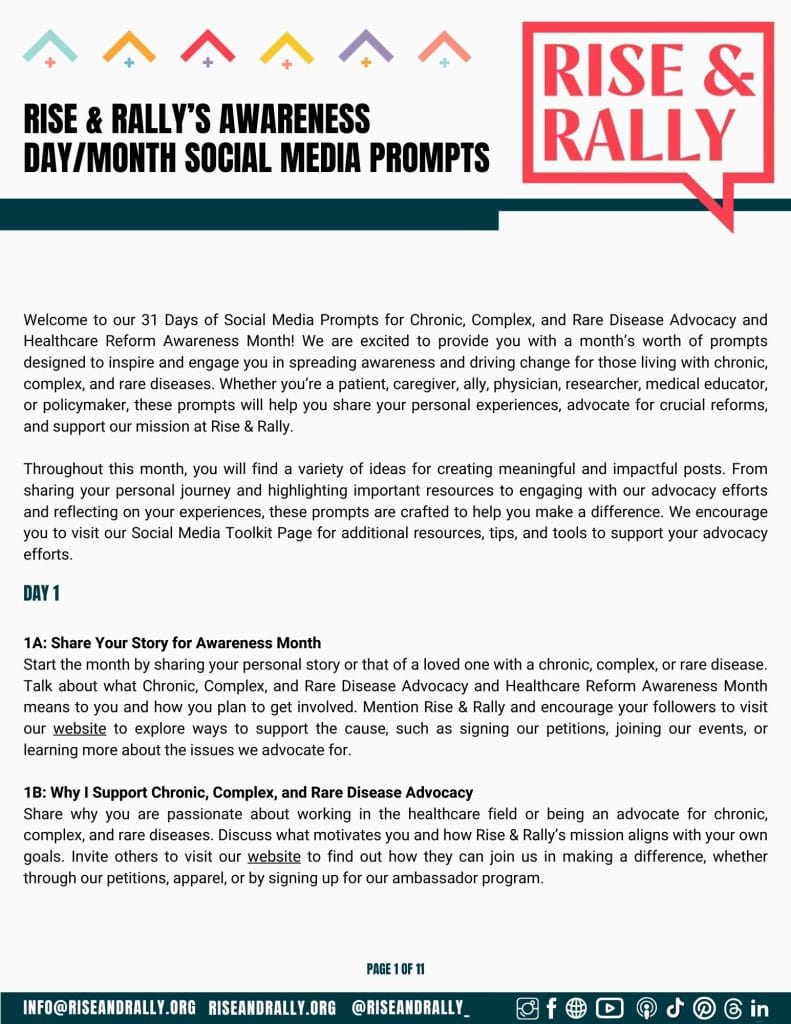
Participating in awareness month activities is another excellent way to get involved in social media advocacy. Many organizations host awareness months dedicated to specific health conditions, during which they provide prompts or themes for each day or week. These activities can include sharing educational posts, personal stories, or specific hashtags. This structured approach makes it easy to engage and contribute meaningfully, even if you’re new to social media advocacy.UTILIZE HASHTAGS & TAGGING
Hashtags and tagging are powerful tools to increase the visibility of your posts. Here’s how to use them effectively:
Relevant Hashtags: Use popular and relevant hashtags related to chronic, complex, and rare conditions. Examples include #HealthcareReform, #ChronicIllness, #RareDisease, #PatientAdvocacy, and #RiseAndRally.
Tagging Accounts: Tag influential accounts, including @riseandrally_ on Instagram, Twitter, and Facebook. Tagging relevant organizations, advocates, and influencers can help amplify your message.
Branded Hashtags: Create and use branded hashtags like #RiseAndRally or #AdvocacyForChange to build a cohesive campaign and track engagement across different posts.
USE BRANDING MATERIALS
Incorporate Rise & Rally’s branding materials to maintain consistency and professionalism in your advocacy efforts which will help point your audience that wants to get more resources or get involved to our site where they can. Here are some ways you can incorporate our branding:
Official Logos and Icons: Use the provided logos and icons from our brand kit in your graphics and posts.
Color Palettes and Fonts: Stick to the recommended color schemes and fonts to ensure a unified and recognizable look.
Template Customization: Personalize our templates to match your message while maintaining a consistent visual identity.
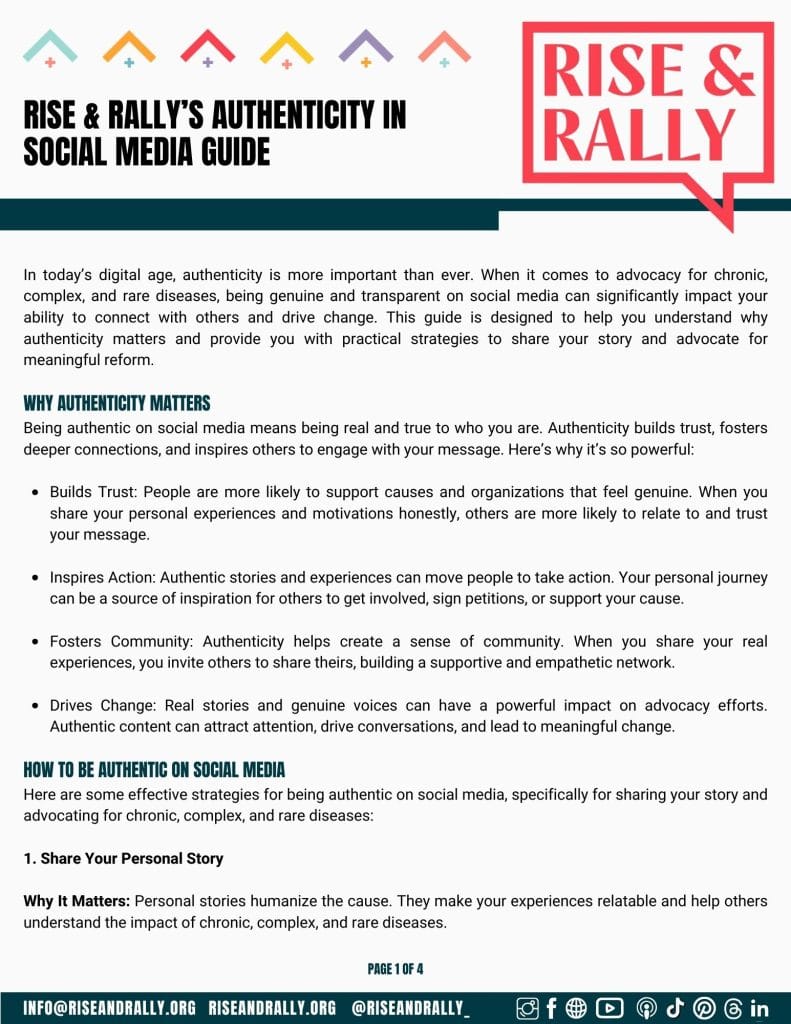
AUTHENTICITY AND PERSONAL CONNECTION
While optimizing your posts with hashtags and branding is important, the most impactful advocacy comes from being authentic and true to yourself. Here’s how you can do that:
Share Your Story: Be open about your experiences, challenges, and triumphs. Personal stories resonate deeply and can inspire others to join your cause.
Engage with Your Audience: Respond to comments, share feedback, and foster a community of support and understanding.
Passion and Purpose: Let your passion for the cause shine through. Authenticity and genuine care are the most powerful tools in advocacy.
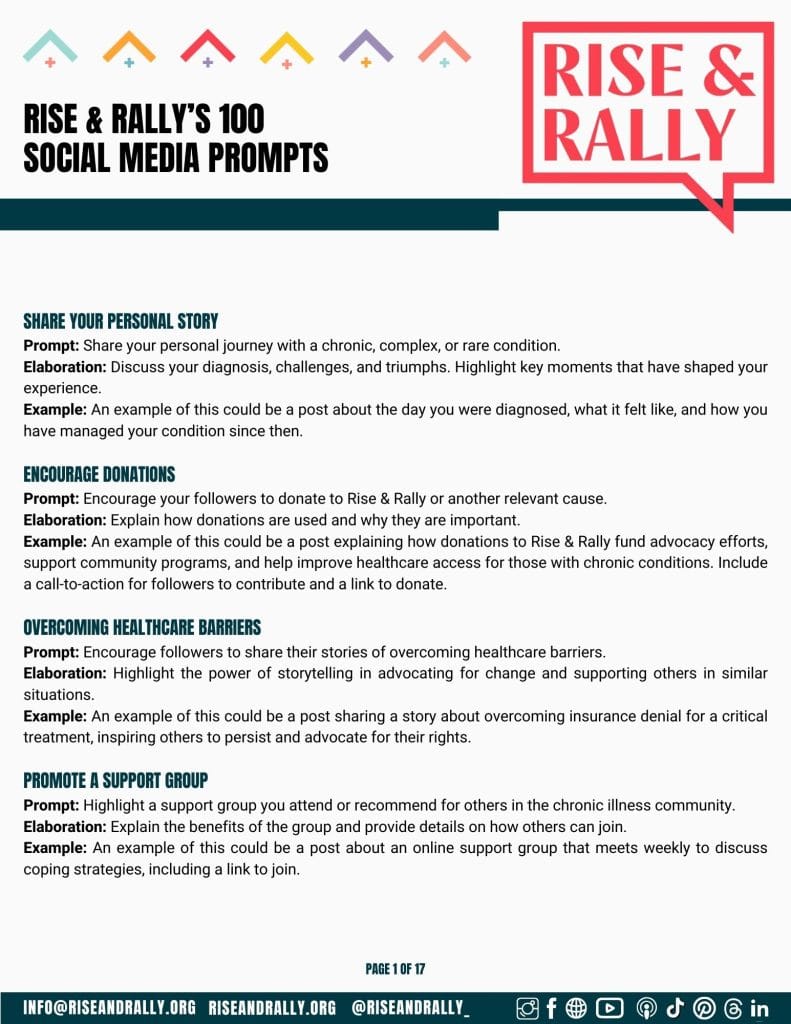
100 SOCIAL MEDIA ADVOCACY POST PROMPT IDEAS
Prompt: Share your personal journey with a chronic, complex, or rare condition.
Elaboration: Discuss your diagnosis, challenges, and triumphs. Highlight key moments that have shaped your experience.
Example: An example of this could be a post about the day you were diagnosed, what it felt like, and how you have managed your condition since then.
Prompt: Highlight a support group you attend or recommend for others in the chronic illness community.
Elaboration: Explain the benefits of the group and provide details on how others can join.
Example: An example of this could be a post about an online support group that meets weekly to discuss coping strategies, including a link to join.
Prompt: Share a resource that has been helpful in managing your condition or advocating for better care.
Elaboration: Describe the resource and how it has helped you or others.
Example: An example of this could be a post about a particular book or website that offers valuable tips for managing chronic pain, including a link for your followers.
Prompt: Celebrate a significant milestone in your health journey or advocacy efforts.
Elaboration: Reflect on what this milestone means to you and how you reached it.
Example: An example of this could be a post celebrating one year of a new treatment regimen that has significantly improved your quality of life.
Prompt: Post an inspirational quote that resonates with your health journey or advocacy.
Elaboration: Explain why this quote is meaningful to you and how it has inspired you.
Example: An example of this could be a post with a quote from a famous advocate or author that helped you stay motivated during tough times.
Prompt: Give a shout-out to another advocate who inspires you.
Elaboration: Share their story and why their work is important.
Example: An example of this could be a post about a fellow advocate who has made significant strides in raising awareness for a rare disease, including their social media handles.
Prompt: Provide a practical health tip that has helped you manage your condition.
Elaboration: Explain the tip and how it can benefit others.
Example: An example of this could be a post about the benefits of a specific dietary change that has improved your symptoms, with suggestions on how to incorporate it into daily life.
Prompt: Share a typical day in your life managing a chronic condition.
Elaboration: Detail the routines and activities that help you get through the day.
Example: An example of this could be a post outlining your daily schedule, from medication timings to self-care practices, with photos of key moments.
Prompt: Talk about an upcoming medical appointment, including your expectations and concerns.
Elaboration: Share what you hope to achieve from the appointment and any preparations you are making.
Example: An example of this could be a post about preparing for a specialist visit, including questions you plan to ask and any research you’ve done beforehand.
Prompt: Discuss your goals for advocacy in the chronic, complex, and rare disease community.
Elaboration: Outline what you hope to achieve and why these goals are important to you and others in the community.
Example: An example of this could be a post outlining your goals to raise awareness about insurance barriers and how you plan to work towards policy changes.
Prompt: Highlight the importance of support systems and how they have helped you.
Elaboration: Share stories about friends, family, or support groups that have been instrumental in your journey.
Example: An example of this could be a post thanking your family for their support during a tough time and explaining how their encouragement has made a difference.
Prompt: Discuss the impact of chronic illness on mental health and the importance of seeking help.
Elaboration: Share your experiences with mental health struggles and the strategies you use to cope.
Example: An example of this could be a post about the importance of therapy in managing both your mental health and chronic illness, encouraging others to seek support.
Prompt: Give a glimpse into your daily routine managing a chronic condition.
Elaboration: Detail the specific steps you take to manage your health each day, including medications, therapies, and self-care practices.
Example: An example of this could be a post outlining your daily medication schedule and how you balance it with other aspects of your life.
Prompt: Join a social media challenge related to health or advocacy.
Elaboration: Explain the challenge and your participation, encouraging your followers to join in.
Example: An example of this could be a post about participating in a month-long health challenge, sharing your progress and inviting others to participate.
Prompt: Share a petition related to healthcare reform or support for chronic, complex, and rare conditions.
Elaboration: Explain the petition’s purpose and encourage your followers to sign and share it.
Example: An example of this could be a post promoting a petition for increased funding for rare disease research, explaining its importance and providing a link to sign.
Prompt: Give a shout-out to a medical professional who has made a positive impact on your health journey.
Elaboration: Share how they have helped you and why they deserve recognition.
Example: An example of this could be a post thanking your specialist for their dedication and compassionate care, sharing a photo of you with them.
Prompt: Promote a fundraising campaign that supports research or advocacy efforts.
Elaboration: Explain the campaign’s goal and how the funds will be used.
Example: An example of this could be a post about a fundraising walk for a rare disease, detailing how people can donate and participate.
Prompt: Celebrate a significant health milestone, such as a diagnosis anniversary or achieving a health goal.
Elaboration: Reflect on your journey and what this milestone means to you.
Example: An example of this could be a post marking the anniversary of your diagnosis, sharing your reflections on how far you’ve come and what you’ve learned.
Prompt: Provide updates on healthcare policies or legislation that impact the community.
Elaboration: Explain the policy changes and what they mean for patients and caregivers.
Example: An example of this could be a post about new legislation that improves access to rare disease treatments, explaining its significance and how it will help.
Prompt: Announce and promote an upcoming webinar or event related to healthcare advocacy.
Elaboration: Provide details about the event, including how to register and what to expect.
Example: An example of this could be a post promoting a webinar hosted by Rise & Rally on navigating insurance appeals, including the date, time, and registration link.
Prompt: Discuss the need for insurance reform to better support patients with chronic, complex, and rare conditions.
Elaboration: Share your experiences with insurance barriers and suggest potential solutions.
Example: An example of this could be a post about the challenges you’ve faced getting coverage for necessary treatments and calling for policy changes to improve access.
Prompt: Highlight a success story in advocacy, either personal or within the community.
Elaboration: Celebrate the achievement and discuss its impact on the community.
Example: An example of this could be a post about successfully advocating for a new law that improves access to medical care, sharing the journey and thanking supporters.
Prompt: Share your goals and hopes for the future regarding your health and advocacy work.
Elaboration: Discuss what you aim to achieve and how you plan to get there.
Example: An example of this could be a post outlining your goals for the next year, such as raising awareness about a specific condition or starting a new advocacy campaign.
Prompt: Engage in activities and campaigns during a designated awareness month for your condition.
Elaboration: Share what you’re doing each day or week to raise awareness and encourage others to join you.
Example: An example of this could be a post each day during an awareness month, highlighting different aspects of living with your condition and encouraging followers to participate in awareness activities.
Prompt: Educate your followers about Rise & Rally’s mission and goals.
Elaboration: Explain the organization’s purpose, the work it does, and how people can get involved.
Example: An example of this could be a post introducing Rise & Rally, sharing its mission to advocate for healthcare reform and support for those with chronic, complex, and rare conditions, and providing links to join or donate.
Prompt: Showcase the different programs and initiatives offered by Rise & Rally.
Elaboration: Detail how these programs support the community and their impact.
Example: An example of this could be a post about a specific Rise & Rally program, such as a support group or advocacy training, explaining how it helps members and how to participate.
Prompt: Promote Rise & Rally’s apparel and merchandise.
Elaboration: Explain how purchasing items supports the organization and its mission.
Example: An example of this could be a post showing you wearing a Rise & Rally t-shirt, explaining how proceeds from sales fund advocacy efforts, and providing a link to the online store.
Prompt: Share information about legislation that Rise & Rally is advocating for.
Elaboration: Explain the legislation, its importance, and how followers can support it.
Example: An example of this could be a post detailing a bill that Rise & Rally supports, explaining how it will improve healthcare for those with chronic conditions, and encouraging followers to contact their representatives.
Prompt: Raise awareness about Rise & Rally’s designated awareness day or month.
Elaboration: Share information about the significance of the awareness day/month, planned activities, and how your followers can participate and support the cause.
Example: An example of this could be a post announcing Rise & Rally’s Awareness Month, detailing events, webinars, or social media challenges planned for the month, and encouraging followers to participate by sharing their stories, using specific hashtags, and attending virtual events.
Prompt: Celebrate a personal achievement related to your health journey or advocacy work.
Elaboration: Reflect on the effort it took to achieve this milestone and its significance.
Example: An example of this could be a post celebrating your completion of a marathon despite your chronic condition, sharing the training process and your feelings about reaching the finish line.
Prompt: Share the coping mechanisms you use to manage your condition.
Elaboration: Explain how these strategies help you and could help others in similar situations.
Example: An example of this could be a post about the benefits of meditation and mindfulness in managing chronic pain, with tips on how to get started.
Prompt: Discuss the importance of medical research in finding cures and improving treatments.
Elaboration: Share your personal connection to the need for research and encourage support for research initiatives.
Example: An example of this could be a post about a new research study related to your condition, explaining its potential impact and how people can support it.
Prompt: Post a motivational story that has inspired you on your health journey.
Elaboration: Explain why this story is meaningful and how it has impacted your perspective.
Example: An example of this could be a post about another patient who overcame significant obstacles to achieve a major goal, and how their story has motivated you.
Prompt: Encourage your followers to donate to Rise & Rally or another relevant cause.
Elaboration: Explain how donations are used and why they are important.
Example: An example of this could be a post explaining how donations to Rise & Rally fund advocacy efforts, support community programs, and help improve healthcare access for those with chronic conditions. Include a call-to-action for followers to contribute and a link to donate.
Prompt: Share a quote that inspires your advocacy work.
Elaboration: Explain why this quote resonates with you and how it reflects your advocacy goals.
Example: An example of this could be a post with a quote like “Alone we can do so little; together we can do so much” by Helen Keller, highlighting the importance of community and collaboration in advocacy.
Prompt: Raise awareness about a specific healthcare awareness day or month.
Elaboration: Share information about the day/month, its significance, and how it relates to your advocacy work.
Example: An example of this could be a post during Breast Cancer Awareness Month, discussing the importance of early detection and sharing resources for mammograms and support.
Prompt: Collaborate with another advocate or organization to amplify your message.
Elaboration: Explain the collaboration, its goals, and how it benefits the community.
Example: An example of this could be a post announcing a collaboration between Rise & Rally and another advocacy group to host a joint webinar on legislative advocacy, inviting followers to join and participate.
Prompt: Share tips and strategies for effective advocacy.
Elaboration: Provide actionable advice based on your advocacy experience.
Example: An example of this could be a post about effective advocacy strategies, such as how to write persuasive emails to legislators or tips for preparing for a meeting with policymakers.
Prompt: Highlight disparities in healthcare access and outcomes.
Elaboration: Share data and personal stories to illustrate these disparities.
Example: An example of this could be a post discussing racial disparities in healthcare, citing statistics and sharing stories from marginalized communities affected by these disparities.
Prompt: Reflect on your growth and experiences as an advocate.
Elaboration: Share challenges you’ve faced, lessons learned, and how your advocacy has evolved.
Example: An example of this could be a post celebrating your advocacy journey’s milestones, from your first awareness campaign to speaking at a legislative hearing, and how these experiences have shaped your advocacy approach.
Prompt: Discuss stigma associated with your condition and ways to combat it.
Elaboration: Share personal experiences with stigma and strategies for raising awareness.
Example: An example of this could be a post challenging misconceptions about mental health disorders, sharing facts and personal stories to reduce stigma and encourage open conversations.
Prompt: Celebrate a successful collaboration or partnership in your advocacy work.
Elaboration: Highlight the partners involved, the project’s impact, and lessons learned.
Example: An example of this could be a post celebrating a partnership with a healthcare organization to launch a patient support program, sharing outcomes and thanking collaborators for their contributions.
Prompt: Discuss the importance of accessible healthcare technology for all patients.
Elaboration: Share personal experiences with healthcare technology and advocate for inclusive design.
Example: An example of this could be a post advocating for telemedicine accessibility for people with disabilities, sharing stories and calling for better design and policy.
Prompt: Share a recent policy victory in healthcare advocacy.
Elaboration: Explain the policy change, its impact, and how advocacy efforts contributed to the success.
Example: An example of this could be a post celebrating the passing of a bill to improve insurance coverage for rare disease treatments, sharing the advocacy journey and thanking supporters for their contributions.
Prompt: Discuss holistic approaches to managing your condition.
Elaboration: Share alternative therapies, lifestyle changes, or integrative medicine practices.
Example: An example of this could be a post about the benefits of acupuncture for pain management in chronic illness, sharing personal experiences and encouraging followers to explore holistic health options.
Prompt: Highlight a success story from someone in Rise & Rally’s community.
Elaboration: Share their achievements, challenges overcome, and how Rise & Rally supported them.
Example: An example of this could be a post featuring a community member who advocated for improved healthcare access and successfully navigated insurance challenges, sharing their story and inspiring others.
Prompt: Advocate for better healthcare accessibility for underserved communities.
Elaboration: Discuss barriers to access and propose solutions or actions for change.
Example: An example of this could be a post about the lack of healthcare facilities in rural areas, highlighting the impact on residents’ health and calling for improved infrastructure and telehealth services.
Prompt: Share information about an educational opportunity related to advocacy or healthcare.
Elaboration: Explain the program, its benefits, and how it can help followers become better advocates.
Example: An example of this could be a post promoting a virtual workshop on healthcare policy advocacy, including details on speakers and registration information.
Prompt: Discuss the financial challenges of healthcare and ways to advocate for affordability.
Elaboration: Share personal experiences with medical costs and strategies for cost management.
Example: An example of this could be a post advocating for price transparency in healthcare, sharing personal stories of unexpected medical bills and advocating for policy changes to protect patients.
Prompt: Provide tips for followers on how to advocate for themselves in healthcare settings.
Elaboration: Offer strategies for speaking up, asking questions, and navigating medical appointments.
Example: An example of this could be a post with tips on how to prepare for a doctor’s appointment, including making a list of questions and bringing a trusted advocate with you.
Prompt: Discuss the importance of patient-centered care in healthcare settings.
Elaboration: Share examples of patient-centered practices and advocate for their adoption.
Example: An example of this could be a post about the benefits of shared decision-making in treatment plans, sharing personal experiences and calling for healthcare providers to prioritize patient preferences.
Prompt: Advocate for improved mental health support for patients with chronic conditions.
Elaboration: Discuss the impact of chronic illness on mental health and propose solutions.
Example: An example of this could be a post advocating for integrated mental health services in chronic disease management, sharing personal experiences and resources for mental health support.
Prompt: Discuss the intersection of disability rights and healthcare advocacy.
Elaboration: Share insights on accessibility, inclusivity, and advocacy for disability rights.
Example: An example of this could be a post advocating for accessible transportation options for people with disabilities, sharing stories of transportation barriers and advocating for policy changes.
Prompt: Share insights, learnings, or highlights from a recent healthcare conference or advocacy event.
Elaboration: Summarize key takeaways, discussions, or presentations that impacted your advocacy work.
Example: An example of this could be a post about attending a rare disease summit, sharing new research findings and networking experiences that inspired advocacy initiatives.
Prompt: Discuss the impact of technology on healthcare delivery and patient outcomes.
Elaboration: Share examples of innovative healthcare technologies and their potential benefits.
Example: An example of this could be a post about the benefits of telemedicine in improving access to specialists for rural patients, sharing personal experiences and advocating for broader adoption.
Prompt: Advocate for health equity and reducing disparities in healthcare.
Elaboration: Discuss systemic barriers and advocate for policies that promote equitable access to care.
Example: An example of this could be a post advocating for culturally competent healthcare services for minority communities, sharing data on disparities and calling for policy changes.
Prompt: Issue a call to action for your followers to support a specific advocacy initiative or campaign.
Elaboration: Explain the issue, why it’s important, and how followers can take action.
Example: An example of this could be a post urging followers to contact legislators to support a bill for expanded healthcare coverage, providing a script and contact information.
Prompt: Reflect on challenges you’ve faced in your advocacy journey and how you’ve overcome them.
Elaboration: Share lessons learned, resilience gained, and strategies for navigating obstacles.
Example: An example of this could be a post reflecting on the difficulties of navigating insurance denials, sharing personal stories of persistence and tips for appealing decisions.
Prompt: Share your advocacy goals for the upcoming year or a specific campaign.
Elaboration: Explain why these goals are important and how they align with your mission.
Example: An example of this could be a post outlining goals to advocate for increased research funding for a specific condition, including steps like meeting with policymakers and mobilizing supporters.
Prompt: Advocate for the use of inclusive and respectful language in healthcare settings.
Elaboration: Discuss the impact of language on patient care and suggest alternatives to stigmatizing terms.
Example: An example of this could be a post advocating for person-first language in discussing disabilities, explaining its importance in promoting dignity and respect.
Prompt: Offer a behind-the-scenes look at your advocacy work or a recent project.
Elaboration: Share the process, challenges faced, and outcomes achieved.
Example: An example of this could be a post showing photos from organizing a community health fair, sharing stories of collaboration and impact on attendees.
Prompt: Highlight an individual or organization that inspires your advocacy work.
Elaboration: Share their accomplishments, impact, and why they are a role model to you.
Example: An example of this could be a post honoring a healthcare advocate who has made significant legislative changes, sharing their achievements and strategies that inspire your own advocacy efforts.
Prompt: Discuss the importance of patient safety in healthcare settings.
Elaboration: Share personal experiences or statistics on patient safety issues and advocate for improvements.
Example: An example of this could be a post advocating for standardized medication labeling to reduce errors, sharing stories and calling for policy changes.
Prompt: Share tips for planning and executing successful advocacy campaigns.
Elaboration: Provide strategies for mobilizing supporters, engaging policymakers, and measuring impact.
Example: An example of this could be a post outlining steps for launching a social media campaign to raise awareness about a healthcare issue, including creating compelling content and using hashtags strategically.
Prompt: Highlight innovative healthcare solutions or technologies that benefit patients.
Elaboration: Share examples and potential impacts on improving healthcare outcomes.
Example: An example of this could be a post about wearable devices that monitor vital signs in real-time, discussing their benefits for chronic disease management and advocating for broader accessibility.
Prompt: Advocate for increased diversity in clinical trials and research studies.
Elaboration: Discuss the importance of representation and its impact on treatment effectiveness.
Example: An example of this could be a post advocating for more inclusive recruitment strategies in clinical trials for cancer treatments, sharing data and calling for policy changes to address disparities.
Prompt: Encourage followers to share their stories of overcoming healthcare barriers.
Elaboration: Highlight the power of storytelling in advocating for change and supporting others in similar situations.
Example: An example of this could be a post sharing a story about overcoming insurance denial for a critical treatment, inspiring others to persist and advocate for their rights.
Prompt: Share a personal story about an experience with medical trauma and how it has impacted you.
Elaboration: Highlight the emotional and psychological effects of medical trauma and the importance of addressing these issues within healthcare.
Example: An example of this could be a post discussing a traumatic hospital experience, the lingering effects on your mental health, and advocating for better trauma-informed care practices in medical settings.
Prompt: Highlight the issue of gaslighting in healthcare and its impact on patient trust.
Elaboration: Share examples of gaslighting, how it undermines patient confidence, and advocate for respectful and validating healthcare practices.
Example: An example of this could be a post sharing a personal story of being dismissed by a doctor, discussing the emotional impact, and calling for healthcare professionals to listen and validate patient concerns.
Prompt: Discuss the need for better healthcare policies and what changes you’d like to see.
Elaboration: Share your personal experiences with the healthcare system and suggest specific policy changes.
Example: An example of this could be a post calling for improved access to mental health services for chronic illness patients, sharing your own challenges and proposed solutions.
Prompt: Create or promote a social media challenge to raise awareness about your condition.
Elaboration: Explain the challenge, how to participate, and its goals.
Example: An example of this could be a post promoting a challenge where participants share daily tips for managing a chronic condition, using a specific hashtag.
Prompt: Provide an update on your health status or recent medical appointments.
Elaboration: Share any new developments, treatments, or changes in your condition.
Example: An example of this could be a post about a recent doctor visit and the new treatment plan you’re starting, sharing your hopes and any concerns.
Prompt: Discuss the importance of patient rights and how they can be protected and promoted.
Elaboration: Share your experiences with patient rights issues and suggest ways to advocate for better protection.
Example: An example of this could be a post about the importance of informed consent in medical treatments, sharing a personal story and urging others to know their rights.
Prompt: Provide a self-care tip that has helped you manage stress and maintain well-being.
Elaboration: Explain the importance of self-care and how your tip can benefit others.
Example: An example of this could be a post about the benefits of journaling for mental health, with suggestions on how to start a daily journaling practice.
Prompt: Recognize a healthcare provider who has provided exceptional care.
Elaboration: Share how their support has made a difference in your health journey.
Example: An example of this could be a post thanking your physical therapist for their innovative treatment approach, sharing a photo of you together and a brief story of their impact.
Prompt: Discuss the need for accessible healthcare for all individuals, regardless of their condition.
Elaboration: Share your experiences with accessibility issues and propose solutions to improve access.
Example: An example of this could be a post about the importance of telehealth services for those with mobility challenges, advocating for wider adoption and coverage.
Prompt: Express gratitude for the support you’ve received on your health journey.
Elaboration: Reflect on the people and resources that have helped you and share your appreciation.
Example: An example of this could be a post thanking your online support community for their encouragement and advice, sharing a photo of a supportive message you received.
Prompt: Share a story about an inspirational figure in the chronic illness community.
Elaboration: Explain why this person inspires you and how their story has impacted you.
Example: An example of this could be a post about a well-known advocate who has made significant strides in raising awareness for rare diseases, sharing their story and accomplishments.
Prompt: Post a fun fact related to your condition or the broader health community.
Elaboration: Share an interesting and lesser-known piece of information that can educate and engage your followers.
Example: An example of this could be a post about a rare symptom of your condition that most people aren’t aware of, explaining its significance and impact on daily life.
Prompt: Share details about an upcoming Rise & Rally event.
Elaboration: Explain the purpose of the event and how people can participate or support it.
Example: An example of this could be a post about an upcoming virtual town hall hosted by Rise & Rally, including details on how to join and the topics that will be covered.
Prompt: Highlight any media features or articles about Rise & Rally.
Elaboration: Share links to the media coverage and summarize the key points.
Example: An example of this could be a post about a recent news article featuring Rise & Rally’s advocacy work, including a link to the article and a brief summary.
Prompt: Talk about the importance of community in managing chronic illness.
Elaboration: Share your experiences with finding and building community support.
Example: An example of this could be a post about the connections you’ve made through online support groups, highlighting the emotional and practical benefits.
Prompt: Highlight a success story from Rise & Rally’s advocacy efforts.
Elaboration: Share details about the success and its impact on the community.
Example: An example of this could be a post about a successful campaign led by Rise & Rally that resulted in a new healthcare policy, explaining the process and thanking supporters.
Prompt: Share a testimonial from someone impacted by your advocacy work or from someone you have helped.
Elaboration: Highlight the positive changes and gratitude expressed by this person to show the real-life impact of your efforts.
Example: An example of this could be a post featuring a quote from a person thanking you for your support in navigating healthcare challenges, along with a photo of you together.
Prompt: Share significant milestones or achievements in your advocacy journey.
Elaboration: Reflect on the impact of these milestones and thank supporters.
Example: An example of this could be a post celebrating reaching a petition signature goal for healthcare reform, sharing the milestone and acknowledging the collective effort of supporters.
Prompt: Discuss how social determinants of health affect healthcare access and outcomes.
Elaboration: Share examples and advocate for policies addressing these determinants.
Example: An example of this could be a post discussing the impact of housing instability on health outcomes, sharing stories and advocating for supportive housing initiatives.
Prompt: Advocate for equal insurance coverage for mental health and physical health treatments.
Elaboration: Discuss disparities in coverage and advocate for policy changes.
Example: An example of this could be a post advocating for legislation that mandates equal coverage for mental health services, sharing personal stories and calling for policy reforms.
Prompt: Share resources that empower patients to navigate their healthcare journey.
Elaboration: Provide links to support groups, advocacy organizations, and educational materials.
Example: An example of this could be a post listing online resources for newly diagnosed patients, including tips for finding reliable information and connecting with peer support groups.
Prompt: Advocate for transparency in healthcare costs, quality, and outcomes.
Elaboration: Discuss the benefits of transparency and advocate for policies that promote it.
Example: An example of this could be a post advocating for public reporting of hospital infection rates, sharing data and calling for increased transparency to empower patients.
Prompt: Share a personal reflection on what advocacy means to you and why it’s important.
Elaboration: Reflect on moments of impact, challenges faced, and your commitment to advocacy.
Example: An example of this could be a post reflecting on how advocating for better healthcare access has shaped your identity and goals, sharing personal insights and a renewed commitment to the cause.
Prompt: Discuss how technology can empower patients through education and information.
Elaboration: Share examples of patient education tools and their benefits.
Example: An example of this could be a post about mobile apps that provide personalized health information, discussing their role in empowering patients to make informed decisions.
Prompt: Advocate for better accommodations for individuals with disabilities in healthcare settings.
Elaboration: Discuss barriers to accessibility and advocate for policy changes.
Example: An example of this could be a post advocating for accessible medical equipment in hospitals, sharing personal stories and calling for improved design and implementation of disability accommodations.
Prompt: Highlight the contributions of caregivers and their impact on patient outcomes.
Elaboration: Share stories of caregiving and advocate for support resources.
Example: An example of this could be a post honoring family caregivers during National Caregivers Month, sharing stories of dedication and advocating for policies that recognize and support caregivers.
Prompt: Share your vision for an ideal healthcare system and the steps needed to achieve it.
Elaboration: Discuss key priorities, challenges, and your role in advocating for change.
Example: An example of this could be a post outlining a vision for patient-centered healthcare, emphasizing preventive care and equitable access, and calling for collaborative efforts to achieve these goals.
Prompt: Discuss health disparities affecting children and advocate for pediatric healthcare equity.
Elaboration: Share data on disparities and advocate for policies that prioritize children’s health.
Example: An example of this could be a post discussing disparities in pediatric asthma treatment, sharing stories and advocating for policies that address environmental factors affecting children’s health.
Prompt: Share practical tips for individuals new to advocacy work.
Elaboration: Provide guidance on getting started, finding support, and making an impact.
Example: An example of this could be a post with tips for writing effective advocacy letters to legislators, including templates and resources for beginners.
Prompt: Advocate for gender equity in healthcare access, research, and treatment.
Elaboration: Discuss disparities and advocate for policies promoting gender-sensitive care.
Example: An example of this could be a post advocating for more research on women’s heart health, sharing statistics and advocating for gender-inclusive treatment guidelines.
Prompt: Share a favorite moment or memory from your advocacy journey.
Elaboration: Reflect on what made this moment special and its impact on your advocacy work.
Example: An example of this could be a post reminiscing about a successful advocacy campaign, sharing memories of teamwork and celebrating achievements with supporters.
Prompt: Thank your followers for their support and contributions to your advocacy efforts.
Elaboration: Express gratitude and share stories of impact made possible by their support.
Example: An example of this could be a post thanking followers for signing a petition or attending a fundraising event, sharing stories of advocacy milestones achieved together.
DOWNLOADABLE RESOURCES


CHRONIC, COMPLEX AND RARE DISEASE ADVOCACY & HEALTHCARE REFORM AWARENESS DAY/MONTH POSTERs